




The Nuffield Trust – The First Fifty Years – 1939-1989
By Air Chief Marshal Sir David Lee GBE, CB
A Former Trustee and Chairman of the Executive Committee - 1989
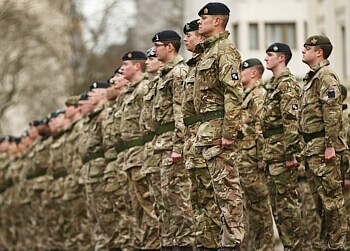
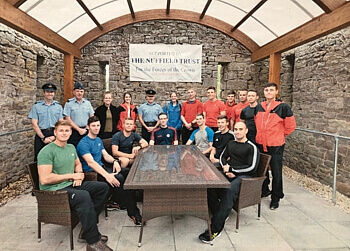
Nobody can be more grateful for the generosity of Lord Nuffield than the men and women of the Armed Forces. They still benefit from that generosity today, fifty years after his creation of the Trust.
The shadows of war were creeping across Europe during the early summer of 1939. The Conscription Act had been passed and young Territorials were being called to the Colours. Lord Nuffield greatly admired the universal willingness of these men and women to accept the Act and decided to make life more comfortable and agreeable for them. War broke out and he immediately set aside one million Ordinary Morris Motors stock units, a gift which was then worth £1,650,000, to create the Trust for the Forces of the Crown on 14th October 1939. At the same time he made an additional gift of £50,000 to cover the first year's expenditure until a return on the investment of the capital sum began to come available.
With the actual coming of the war and the mobilization of reservists, the large intake of men and women and the redeployment of the Forces produced a bigger and much more widespread need for the facilities the Trust was intended to provide, particularly in isolated situations where the paucity of amenities was acute. The Trustees wished to get on with its work quickly, but one difficulty stood in their way; it would take at least a year for the initial income from the original gift of Morris Motors stock to materialize. The Trust had not, and never has had any source of income beyond the interest on its stock and it could not draw on its capital since those funds were to be a permanent memorial to the spirit which animated Lord Nuffield's benefaction. Once again Lord Nuffield did not hesitate to support the provision of a further privileged loan of £50,000 to add to the £50,000 already donated to help the Trust during the first few months of the War.
From that day, the Trust has never looked back. Year by year the capital value of the Trust Fund has grown and the income has increased and the disbursement of grants to the Forces has raised accordingly. During the war years, however, the income accruing was only about £87,000 per annum, but this level has escalated in recent years to reach over £800,000 in 1988.
The object of the Trust was, and still is, to make grants for the provision of facilities and equipment of a recreational, or welfare nature for the benefit of all three Services. Certain strict principles were laid down, and it is useful to record the most important of these as they have never been discarded or changed to any great extent.
Perhaps the first, and over-riding principle is that the Trust should not contribute towards anything which should more properly be provided from Public Funds. Thus, for example, you will never find basic amenities such as football, cricket and hockey pitches being subsidised by the Trust. The Trustees have to keep a very close eye upon all requests for grants to ensure that they are in strict conformity with this principle, and that Lord Nuffield's gift is not used for grants which should be funded from other sources.
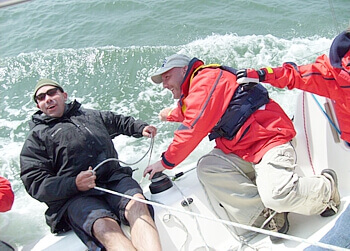
The second principle, of almost equal importance, is that grants should provide for the maximum number of men and women in the Services. For this reason, sports such as polo, are not looked on with favour by the Trustees because they are clearly played by relatively few people. On the other hand, other minority sports and recreations such as golf, sailing and sub-aqua diving have increased so much in popularity that they now fall into a category acceptable to the Trustees. This shift in emphasis is very much in accord with the Trustees overall aim of ensuring that the views of Lord Nuffield, as expressed in his lifetime, are given full weight with the changing pattern of life.
Another principle is that grants be classified as major or minor, the former presently being of £10,000 or less and the latter of not more than £1000. Wherever possible the recipient of a grant is expected to contribute as much as it can afford to the cost of the project. There is an exception to these two categories which will be described later.
At this point, it seems appropriate to acknowledge the fact that Lord Nuffield's gift promoted the development of a modern system of welfare support for the Armed Forces. Previously, in the relatively small pre-war Services, the wellbeing of the men could be left to the individual care of officers, but that arrangement was inadequate for the much larger forces which war necessitated and which continued during the Cold War that has followed the Armistice. There is no doubt that the formation of the Nuffield Trust brought home to Service Chiefs the realization that some scheme over and above the mere provision of basic recreational and welfare facilities would have to be developed. Lord Nuffield's vision, in other words provided the foundation stone for today's comprehensive "welfare" system covering all those serving in any of the three Services worldwide.
Since its inception the Trust has maintained two bodies of Trustees. These include three Ordinary Trustees, who are experienced business men and bankers, responsible for the investment policy of the Trust that produces the annual income which is then available for distribution; and three Governing Trustees who are retired senior officers, one from each Service. Through the Secretary , who is the only full-time employee of the Trust, they consider the detailed recommendations for the expenditure of the individual Service' s annual share of the available income that are approved at the Executive Committee Meeting which is held in March each year. This Executive Committee is well qualified to decide on the order of priority of the many bids received because it consists of the three serving Principal Personnel Officers, namely, the Second Sea Lord, the Adjutant General and the Air Member for Personnel. The bids that are tabled at this meeting have already been carefully filtered by the Secretary of the Trust and representatives from the various Service departments of the Ministry of Defence.
The first Secretary to the Trust was Mrs Margaret Robinson ORE. For many years she kept an eagle eye on the administration of the Trust and ensured strict adherence to the basic principles. She was eventually succeeded in 1970 by Captain T. P .Gillespie CBE, Royal Navy (Retd) who was equally strict and administered the Trust with remarkable economy. Rarely, if ever, can a Charity have been run with such low administrative costs throughout its first 50 years of existence. In 1988 Captain Gillespie retired and Brigadier R.G.Elliot OBE became the new Secretary; continuity being such that he is only the third person to hold that appointment in 50 years!
The facilities provided by the Trust cover an immense range and it would be impossible to describe all of them in a short chapter. In war-time, one of the first things the Trust did was to distribute thousands of radio sets to the British Expeditionary Force. Later thousands more were sent to ships at sea and isolated A.A. sites and barrage balloon units at home. Its Leave Schemes were another unique feature of the Trust's work in the early days. By far the biggest and most valuable scheme was the Nuffield Aircrew Leave Scheme which was started in 1943. It was principally for bomber crews who were under great strain at the time. They could spend their leave at a hotel, chosen from a list of some thirty located all over Great Britain, at little or no cost to themselves. They could take a relative or friend with them, and these were put up at special rates. This scheme, of course, ended with the War.
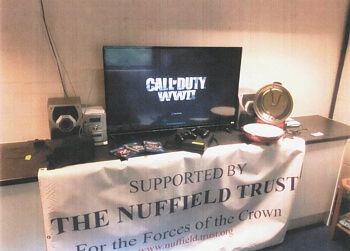
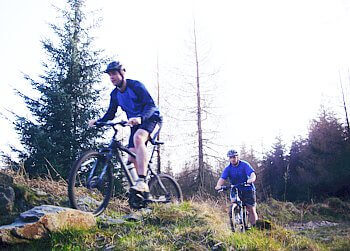
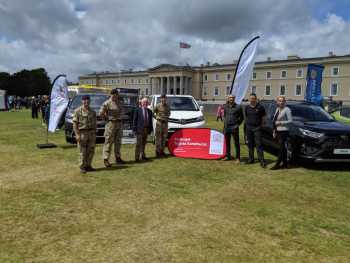
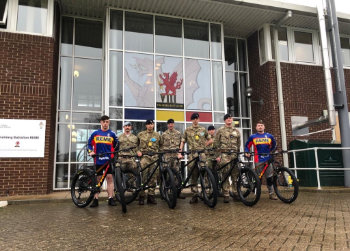
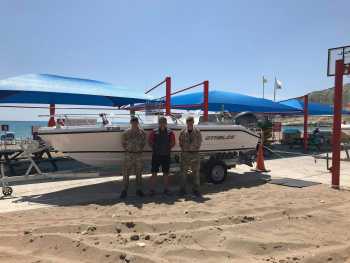
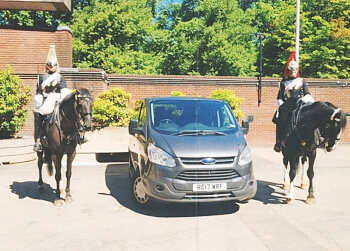
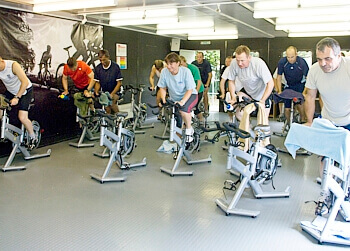
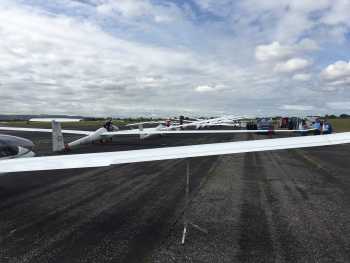
In more recent years, the Trust has been anxious to help particularly those who help themselves or are required to live in isolated conditions that lack proper amenities. Minibuses have traditionally been one of the main items requested. The Trustees have tried hard to maintain the link with Morris Motors of Cowley by subsequently buying British Leyland and, more recently Freight Rover vehicles supplied by Messrs Hartwells of Oxford who have always been most understanding of the particular requirements of the Services and delivered the vehicles, immaculately prepared, wherever in the World the recipients might be stationed. Among the other very popular types of sporting equipment are yachts, sailing dinghies and windsurfers together with motor boats for water skiing and sub-aqua diving. Fitness training equipment such as "Multi-gyms" and weight lifting equipment have also gained favour, particularly in isolated stations. Other grants have been made for gliders; golf course machinery; riding equipment, theatre lighting and instruments for voluntary bands. So much for examples of sporting equipment but these by no means exhaust the list. Grants for television sets and video equipment for use in HM Ships at sea, troops serving in Northern Ireland, the Falkland Islands and with the United Nations Force in Namibia, RAF detachments in isolated locations and for patients in military hospitals have been especially welcome. The Women's Services, including the Nursing Services, have not been neglected since, as specifically directed by Lord Nuffield, special grants are made to them to be spent on small items of equipment that are not available from other sources and which improve the quality of life. At the other end of the spectrum has been the support of those taking part in a wide variety of expeditions and other adventurous pursuits. These have included NORPED, the annual Services' expedition to Norway; the British Services' Expedition to Everest; sponsorship of the Services yacht during the Whitbread Round the World race and adventure training expeditions DRAKE and RALEIGH.
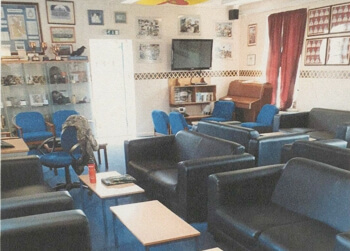
Over the years the Trust has also invested in a variety of "fixed assets". Nuffield's name is best known through a number of well known clubs which were sponsored and managed directly by the Trust. The largest and probably the most famous was the Nuffield Centre, a recreational club for all Service men and women below commissioned rank. It was originally situated in Wardour Street, near Piccadilly Circus. After the adjoining Cafe de Paris had been bombed, it was found that by pulling down a wall the two premises could be connected, so the club obtained permission to take over the Cafe de Paris and rebuild. After the War, it had to move and in July 1948 reopened in what was formerly Gatti's Restaurant in Adelaide Street, near Charing Cross.
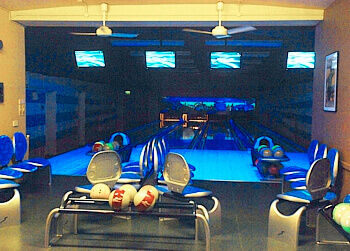
Lord Nuffield is understood to have taken a keen interest in the Nuffield Centre because he wished members of the Forces to be able, while on leave, to enjoy the amenities of London-life without "going broke" in the process. The Centre therefore provided subsidized rates and first-class entertainment free. The regular programme included two variety shows a week and an orchestra on Sundays; the artists gave their services free, though, of course all expenses were paid by the Trust. During the war these all-star shows were broadcast on the radio and subsequently on television. Very large numbers were catered for during the War; on moving in 1948 the average numbers showed a temporary drop but soon rose to 15,000 per week. At the end of 1954 the eight- millionth guest passed through the Centre. A further move in 1974 to Villiers House, John Adam Street was prompted by the termination of the lease and development of the Adelaide Street site. After temporary closure, the Centre reopened at the new location in June 1974. The Centre quickly regained its popularity but by 1978 actual usage had begun to fall and it soon became obvious that it would be uneconomic to extend the lease beyond the current one. The Trustees subsequently decided with deep regret that the Centre should finally close for business at the end of March 1980.
Junior officers and their wives were also not forgotten as the Trust established the Nuffield Club for Junior Officers where rates were fixed according to ability to pay rather than actual costs. During the War the Club was in Halkin Street and known as Nuffield House; but in 1947 it had to move, and it reopened in Lord Bessborough's former house in Eaton Square. However, with a falling membership that reflected the dwindling welfare requirement for the Club in peace-time and consequent increasing subsidy, the Club was closed in 1976.
In the post-war years, the biggest new venture was the building of the Nuffield United Services Officers' Club at Portsmouth, at a cost of some £170,000, with further financial assistance in the running of the Club in its initial stages. The Club was officially opened by H.R.H. Princess Elizabeth in July 1951. The Club proved to be a great success for over 25 years but, with a reduction in the welfare need for such a club and following upon a decision by the Ministry of Defence to sell the freehold of the land on which the Club Buildings stood, the Club was closed in 1979.
The Trust also experienced some problems with "fixed assets" abroad in the days when the Services were deployed in many overseas theatres. More substantial facilities, such as swimming pools and squash courts could not be transferred when the Services left the Theatre. As an example, great difficulty was encountered in obtaining adequate compensation when the British Forces left Singapore, the Gulf, Aden and Malta and had to abandon many of these assets. In the course of time most of the problems were solved, but not without lengthy negotiations and the money received in compensation for these lost assets was, of course, returned to the Trust for future redistribution. With the benefit of hindsight, the Trustees decided that no further "fixed assets" would be provided in the overseas theatres which remained, and even at home stations these were limited to those where a proper length of tenure could be guaranteed.
During the 1960s and 1970s the Services withdrew from the overseas theatres that I have mentioned above and were also reduced considerably in size. At the same time the Trust's funds were growing steadily and more money was therefore available for distribution. The Trustees felt that there was a danger of frittering away these large sums on sporting equipment and relatively small projects. Consequently it was decided to initiate a scheme whereby a "Super Grant" would be allocated each year to the individual Services in rotation and addition to the normal Major and Minor Grants. It was intended that the Super Grant would be spent on large and worthwhile projects in the United Kingdom, where security of tenure was assured. The sum allocated has been increased in line with inflation, and now stands at £150,000.
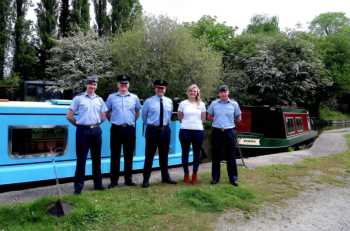
This scheme has been a resounding success and the Trustees feel that it would undoubtedly have met with Lord Nuffield's approval as it conforms so closely with his principles as we understand them. These Super Grants have been spent in a variety of ways. The Royal Navy have taken the opportunity to help fund improvements to The Naval Home Club at Portsmouth and the Royal Fleet Club at Devonport. Many of the other projects to date have been adventure and recreational centres. There is a Joint-Service one at Rothiemurchus Lodge and another for the Royal Air Force at Feshiebridge, both near Aviemore in Scotland. The Royal Air Force also has one near Brecon in Wales and the Royal Navy are currently building one on the edge of Dartmoor. A Naval sports complex at Southwick Park and a water-sports centre on the River Thames belonging to the Royal Air Force complete the list of such centres. The Army has developed swimming pools on Salisbury Plain and sponsored improvements to the Union Jack Club in London. These are all valuable and popular centres which, in particular, satisfy the principle of providing for large numbers of men and women in all three Services.
It can thus be seen that the Trust has prospered over the years. Thanks to the dedicated work of successive Secretaries and the profitable investment policy so ably handled by the Ordinary Trustees, both the income and the Capital derived from Lord Nuffield's original gift in 1939 have increased most satisfactorily, the Capital sum invested having risen to some £16 million. In 1989, at the 50-year point, the total allocations by the Trust will have exceeded £15 million and the dispensation for that particular year will have reached some £830,000, a huge increase on the distribution from the first year of the Trust's life which stood at £87,000. Bearing in mind that there is no income from donations or any other source other than the Trust's own investments, this must reflect excellent and economical management.
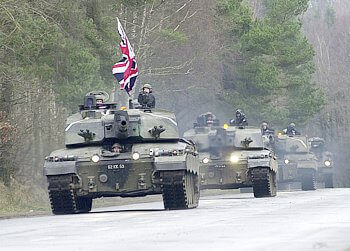
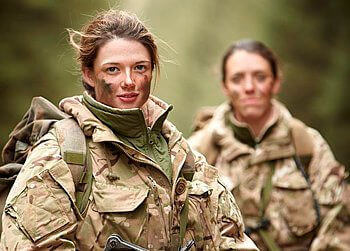
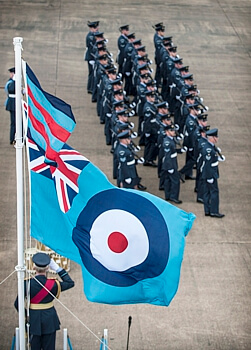
The Royal Navy, the Army and the Royal Air Force continue to benefit in many and varied ways from Lord Nuffield's generous and imaginative benevolence which has so successfully filled the gap between those things that are provided from official sources and those extras which make living conditions more comfortable or recreation more enjoyable. In this context, at no time can this have been more appreciated than by those serving in the arduous conditions of the War or the numerous operational deployments that have followed including Malaya, Korea, Borneo, Aden, Cyprus, Belize, Northern Ireland and the Falkland Islands.